®
®

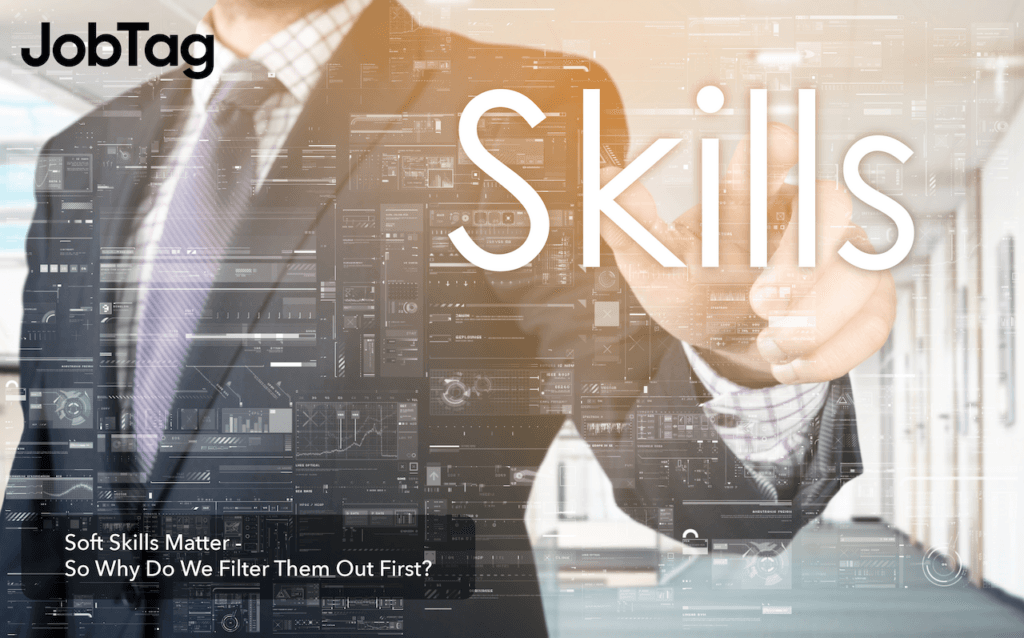
Employers often say they value soft skills.
Communication.
Adaptability.
Collaboration.
Curiosity.
These qualities appear in nearly every job description, and yet, the hiring process often filters them out first.
WHAT WE SAY VS WHAT WE DO
Companies consistently emphasize the importance of soft skills.
They look for people who communicate well.
Work effectively in teams.
Adapt to change.
But the early stages of hiring rarely evaluate these qualities.
Instead, hiring begins with documents.
Resumes.
Keywords.
Filters.
Soft skills are difficult to capture in this format, so they often get overlooked.
THE LIMITATIONS OF DOCUMENTS
Resumes describe experience.
They list roles.
Responsibilities.
Achievements.
But soft skills are harder to represent.
Communication style.
Empathy.
Curiosity.
Presence.
These qualities emerge through interaction, not through bullet points.
WHEN FILTERING COMES FIRST
Many hiring systems prioritize technical matching.
Skills.
Tools.
Experience.
This makes sense, but when filtering happens too early, valuable signals are lost.
Candidates with strong soft skills may never reach the conversation stage, and those conversations are where these qualities often matter most.
WHY SOFT SKILLS MATTER MORE THAN EVER
Work environments continue to evolve.
Teams collaborate across locations.
Roles change quickly.
Projects require adaptability.
Technical skills remain important, but soft skills help people navigate complexity.
They support collaboration.
They improve communication.
They strengthen decision-making.
And yet, they often remain invisible early in hiring.
THE COST OF MISSING THEM
When soft skills are filtered out early, hiring decisions rely heavily on documents.
Candidates may look similar.
Differentiation becomes harder.
Employers may miss strong communicators.
Strong collaborators.
Strong problem-solvers.
Qualities that often shape long-term success.
WHERE JOBTAG FITS
JobTag was built to surface soft skills earlier in the hiring process.
Video pitches show communication style.
Reels reveal personality and energy.
Early conversations improve understanding.
This creates more context before decisions happen, and helps both sides evaluate fit more naturally.
LOOKING FORWARD
Soft skills will continue to matter, but hiring processes must evolve to reflect that.
Ideally when we say that soft skills matter, the process should support it, not filter them out.
Hiring works best when we see more than just resumes, and soft skills often appear first, when we see people.
IF YOU'RE READY FOR BETTER
Explore JobTag - hiring built for humans, not systems.